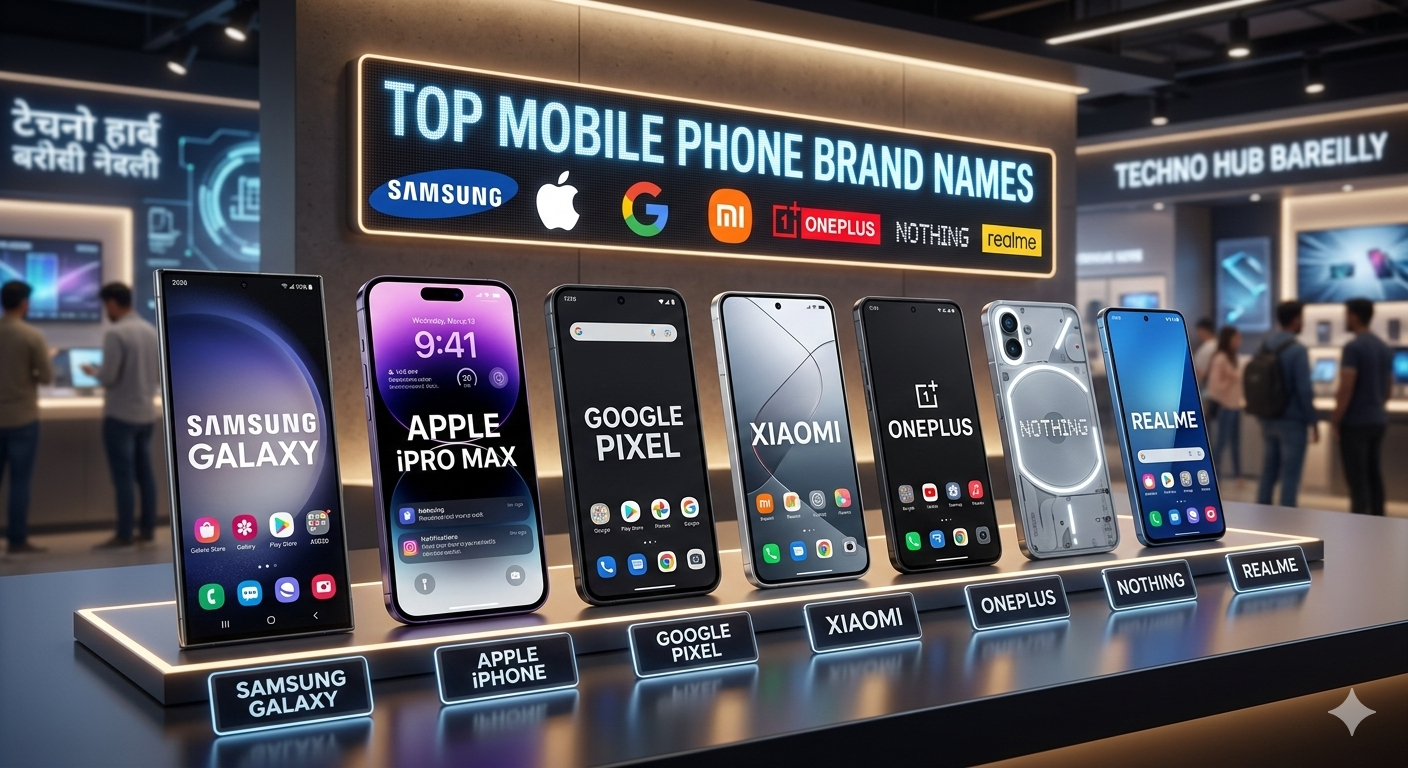
Why these brands matter — and how they’re defining the smartphone industry today.
Smartphones aren’t just gadgets — they’re extensions of our daily lives. From camera quality and battery life to AI features and design, brand identity plays a huge role in how devices are chosen. In 2025-2026, a handful of brands dominate the global tech scene, while emerging names bring fresh competition.
Let’s take a closer look at the most influential and popular smartphone brands today.
🥇 1. Apple — The Premium Icon
Apple remains one of the most influential smartphone brands in the world. Its iPhone lineup, known for sleek design, powerful performance, and tight-knit ecosystem (iOS with seamless integration of Apple Watch, AirPods, and Mac), continues to attract millions of users globally. In 2025, Apple even overtook Samsung as the top global smartphone brand by shipment share — a notable shift in the long-running rivalry.📌 Why Apple stands out:
- Premium design and build quality
- Consistent software updates
- Strong ecosystem and customer loyalty
🥈 2. Samsung — Leader in Innovation
Samsung Electronics remains one of the biggest smartphone brands globally, known for its wide range of devices — from flagship Galaxy S and foldables like the Galaxy Z TriFold to powerful mid-range and budget phones.
📌 Samsung’s strengths:
- Industry-leading screens and foldables
- Strong lineup of 5G and AI-ready phones
- Devices for all budgets and markets
📊 3. Xiaomi — Value & Performance
Xiaomi Corporation continues as one of the most popular brands, especially in Asia and Europe. Known for delivering high-performance phones at competitive prices, Xiaomi appeals to budget-savvy users without compromising specs.
✨ In many markets, Xiaomi holds a top spot in market share due to devices that balance camera tech, features, and price.
📸 4. OPPO & OnePlus — Stylish & Feature-Packed
Both OPPO and OnePlus (from the same parent group) have strong followings:
- OPPO focuses on camera innovation and smart design.
- OnePlus appeals to users who want a clean interface, fast performance, and premium experience at competitive prices.
These brands have become especially popular in Asia, Europe, and India thanks to regular new releases and aggressive pricing.
📷 5. Vivo — Camera & Design Focus
Much like OPPO, Vivo is known for advanced camera technologies and sleek designs, especially in models like the X and V series. Vivo has consistently captured a major share of the Indian smartphone market thanks to a strong lineup across price points.
🍏 6. Other Notable Brand Names
🏆 Google Pixel
Google’s Pixel phones are known for pure Android experiences and strong camera performance — especially in computational photography. Pixel continues to grow as a premium choice for Android purists.
📱 Huawei
Despite global challenges, Huawei and its newer lines like Huawei Pura and Huawei Mate continue innovating with unique OS software and camera tech, gaining traction where available.
💡 Motorola
Iconic brands like Motorola still make waves with modern foldables and nostalgic launches like the Motorola Razr Fold, blending heritage with innovation.
🎯 Honor
Honor has shown remarkable growth recently, becoming one of the fastest-growing smartphone brands among major players.
📍 Regional Leaders — India (2026)
In India specifically, several brands dominate the market due to local demand, pricing, and feature sets:
- Xiaomi — #1 by market share
- Vivo — strong mid-range presence
- Samsung — trusted global brand
- Realme — youth-oriented value devices
- Oppo — camera-centric phones
- Apple — premium segment
- OnePlus — performance-focused
- Motorola & Tecno — niche but growing players
This mix shows how global brands adapt to regional needs, offering everything from budget 5G phones to flagship devices.
📈 What This Means for You (2025–2026)
✔️ More Choice Across Budgets: Whether you want a flagship phone with cutting-edge AI and camera tech, or a reliable mid-range device with long battery, brands today cater to every segment.
✔️ Innovation from All Sides: Brands like Samsung and Apple push premium innovation, while Chinese brands focus on value and features, and niche players like Google and Honor offer unique experiences.
✔️ Regional Preferences Matter: In markets like India, consumer habits shape brand success differently than in the global ranking — with brands like Vivo and Xiaomi leading locally.
✨ Final Thoughts
The world of mobile phones in 2025–2026 isn’t dominated by just one or two names — it’s a diverse ecosystem where innovation, price, and user preference all shape brand success.
Whether you value premium design, affordable performance, camera prowess, or ecosystem integration, there’s a brand that fits your needs — and the competition only means better phones for everyone.
Would you like a comparison post that shows which brand is best for different user types (e.g., photography lovers, gamers, budget buyers)?
No responses yet